If you are sizing up industrial or flex space in Tuscaloosa County, you are in the right place. The local market is shaped by Mercedes-Benz U.S. International in Vance, plus real advantages in rail and river access that many Alabama counties cannot match. You will find a mix of small contractor shops, mid-sized flex, and larger distribution buildings, along with two parks that can handle big, shovel-ready sites. In this guide, you will learn the best locations, common specs, cost and incentive signals, and a clear due diligence path so you can move from search to operations with confidence. Let’s dive in.
Why Tuscaloosa County works for industrial and flex
Tuscaloosa County pairs an automotive anchor with multimodal logistics. The Mercedes-Benz U.S. International complex in Vance anchors a dense supplier network along I‑20/I‑59, which keeps demand steady for warehouses, kitting, and light fabrication near the plant. TCEDA’s major employers overview highlights the scale of MBUSI and its supplier ecosystem.
You also get real modal choice. The Alabama Southern short line offers local rail service, and the Black Warrior River connects to the Port of Mobile via the Tenn-Tom waterway. Those options can reduce delivered costs for steel, aggregates, and bulk commodities when rail or barge fits the flow.
Finally, you have two parks positioned for larger footprints. Airport Industrial Park can accommodate rail-served and river-adjacent distribution, and Cedar Cove Technology Park is set up for heavier utility loads. Both are positioned close to I‑20/I‑59 for truck moves.
Where to focus: corridors and nodes
Vance and the I‑20/I‑59 auto corridor
If you supply, kit, or distribute to MBUSI, proximity often wins. The Vance area concentrates Tier‑1 and Tier‑2 suppliers and supports JIT and JIS operations. Recent coverage of a new logistics facility at MBUSI underscores ongoing expansion activity that can ripple into supplier and 3PL demand (local report on MBUSI logistics expansion).
Airport Industrial Park (Robert Cardinal Road)
This is the county’s largest, most site-ready campus for big projects. TCEDA materials show roughly 1,000 total acres with about 400–450 acres available, rail adjacency, river proximity, and immediate access to Tuscaloosa National Airport. Parcels up to roughly 200 acres are identified for industrial uses. See the Airport Industrial Park site packet and map for utilities, parceling, and access notes.
Use cases here include rail-served manufacturing, large distribution with optional barge moves via the nearby inland dock, and multi-acre yard users. For projects that need heavier power or coordinated utility work, early utility verification is key.
Cedar Cove Technology Park
Cedar Cove is zoned for heavy industry and is often the better fit for process-intensive users that need larger gas mains and heavier utilities. Multi-acre lots are available, and the park sits close to I‑59 for truck access. Review TCEDA’s sites and buildings page for current utility notes and acreage options.
Tuscaloosa Business Park / JVC Road and West Tuscaloosa
For mid-sized manufacturers and multi-tenant flex, the JVC Road area offers practical, move-in-ready options with clear heights typically in the 17–21 foot range and a dock/drive-in mix. The location sits near I‑20/I‑59 and about 10 minutes from MBUSI, which supports supplier needs. An example offering at 1 JVC Road shows the kind of specs common in this pocket.
West/near-river and Rice Mine Road
The near-river area and Rice Mine Road hold larger legacy distribution buildings that can provide immediate occupancy for bigger footprints. Most are older stock with clear heights around 20–24 feet, which can work for many distributors and fabricators. A representative example is a 230,000 square foot distribution asset on Rice Mine Road.
Space types and specs to expect
Small flex and contractor shops (1,500–10,000 SF)
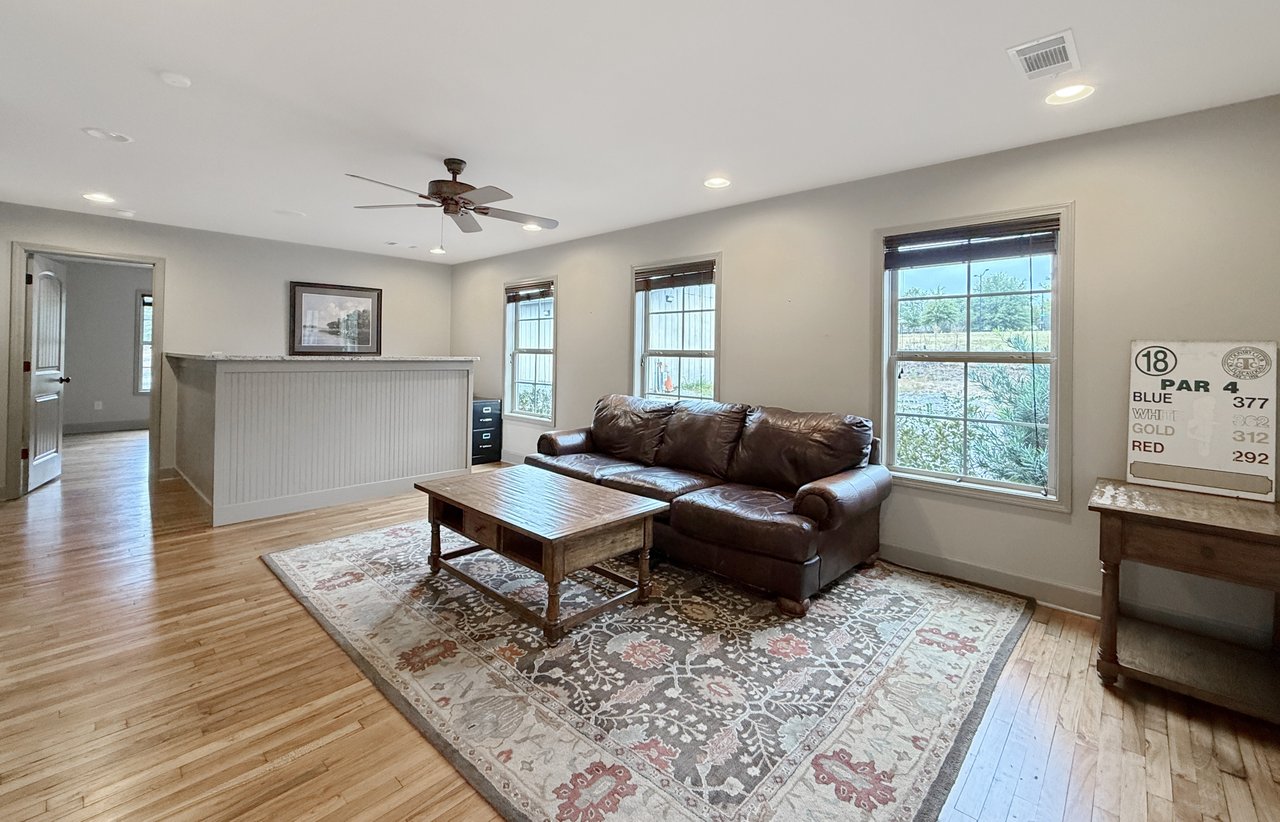
These spaces typically include drive-in doors, modest office build-outs, and lower clear heights. They suit trades, parts distribution, and service companies that value cost, location, and quick access to local routes. You will find these across Northport, the US‑82 corridor, and inner-city flex parks.
Mid-sized flex and industrial (10,000–100,000 SF)
Common features include 17–24 foot clear heights, a mix of dock and drive-in doors, and 1–5 percent office finish in older product. These spaces work well for light assembly, storage, and metal fabrication. Parks like JVC Road offer this mix in multi-tenant formats that allow scaling up or down with less downtime.
Large distribution and heavy manufacturing (100,000–300,000+ SF)
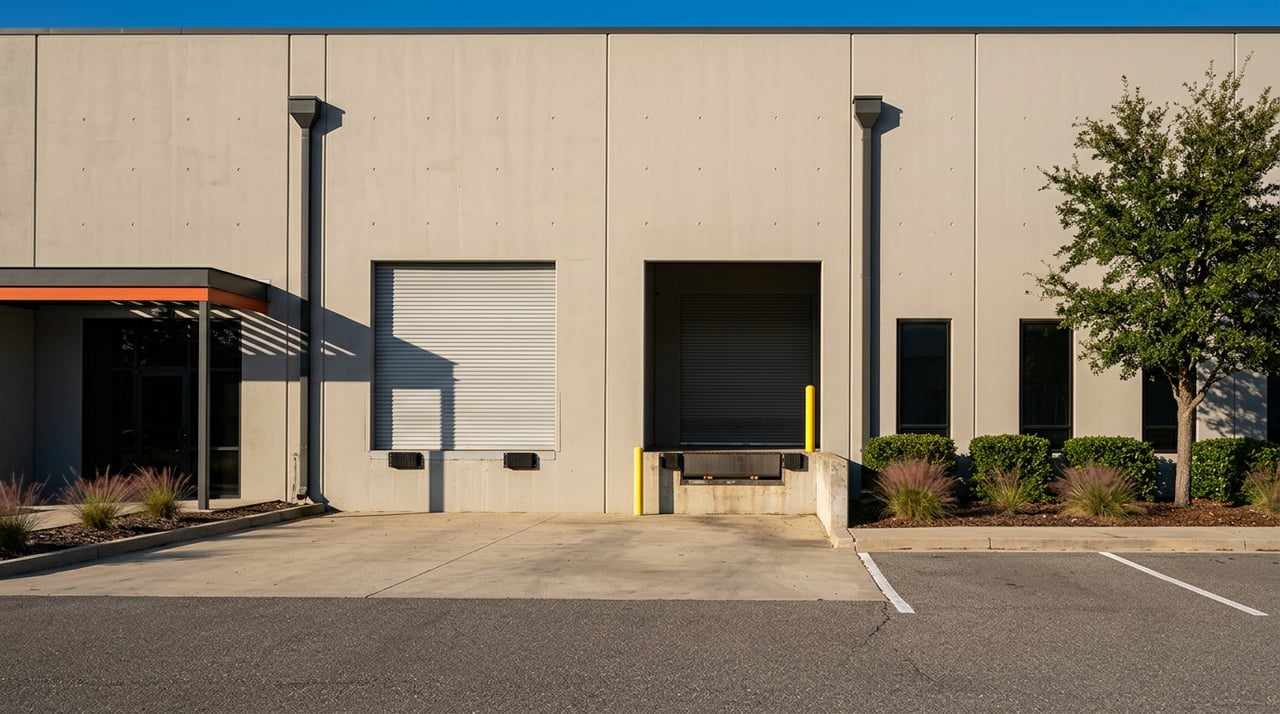
Expect multiple dock doors, truck courts, and fire protection that varies by building age. Clear heights in newer or retrofitted buildings trend higher, while much of the immediate local stock sits in the 20–24 foot range. If you require 30–32 foot clear for high-bay racking, plan for build-to-suit or target parcels in the Airport Industrial Park where modern specs can be delivered.
Logistics and infrastructure snapshot
Rail
The Alabama Southern Railroad, operated by Watco, serves the county and interchanges with Class I railroads. Watco has invested in local yard capacity that improves short-line operations for shippers. If rail matters to your flow, start an early conversation about spur options, switching, and timelines with Alabama Southern Railroad.
River and barge
The Black Warrior River is a federally maintained waterway that connects to the Port of Mobile via the Tennessee-Tombigbee system. The Tuscaloosa–Northport inland dock supports barge activity, and local operators can move bulk cargo efficiently. Review the TCEDA transportation overview for dock details and modal connections.
Highway
Interstates I‑20/I‑59 run through the county with I‑359 into Tuscaloosa. The US‑82 corridor is a major east-west truck route and has seen capacity improvements. ALDOT announced substantial completion of a major US‑82 project in 2024, improving travel times for logistics and last-mile runs along the corridor (US‑82 project update).
Air
Tuscaloosa National Airport supports charter and limited cargo use, and Birmingham (BHM) is the nearest large commercial cargo gateway about 66 miles away. If you rely on air freight, plan around BHM for regular service and use TCL for executive or special cargo purposes.
Utilities
TCEDA site packets show electrical service from Alabama Power, gas from Spire, city water and sewer sized for industrial use, and multiple fiber providers. Cedar Cove shows larger gas main capacity for process-intensive users, while Airport Industrial Park provides flexibility for distribution and manufacturing. Confirm utility sizes and transformer availability early in your process.
Costs, incentives, and timing
Public site packets list asking land prices to set expectations, with final terms negotiated project by project. Recent packets have indicated ranges around 60,000 to 70,000 dollars per acre at Airport Industrial Park and roughly 40,000 dollars per acre at Cedar Cove, subject to change and deal structure. Check TCEDA’s sites and buildings page for the latest materials.
Local authorities regularly consider project-specific incentives tied to jobs and capital investment. Common tools include sales and use tax abatements during construction and targeted ad valorem abatements. Recent MBUSI-related approvals reported in local news show that the community will package incentives when projects commit to jobs and infrastructure (local coverage of incentives activity). Buildout timing varies by site work, utilities, and whether you are retrofitting, expanding, or going ground-up.
Practical site selection checklist
Use this order to keep diligence tight and timelines predictable:
-
Define modal needs. Decide if you need rail, barge, or pure truck and get cost and timing estimates for any rail spur or barge transfer you might need from the appropriate providers. Start with Alabama Southern Railroad for rail service details.
-
Verify utilities on the exact parcel. Request load letters and capacity maps for power, gas, water, sewer, and fiber. TCEDA’s Airport Industrial Park packet is a good template for what to collect.
-
Screen environmental and flood risk. Run FEMA NFHL/FIRM checks, complete a Phase I environmental report, and order wetlands delineation if you are near the river. Start with the FEMA NFHL viewer.
-
Map truck routes and confirm restrictions. Coordinate with ALDOT and the county on routing, turn radii, and any axle limits that might affect delivery schedules. The recent US‑82 improvements are a helpful reference point.
-
Engage TCEDA on incentives and timing. Ask for precedent packages for comparable projects and confirm any local approvals process. Use TCEDA’s sites and buildings hub to initiate the conversation.
-
Align workforce and training support. For specialized roles, engage regional partners early so hiring and training run in parallel with your build schedule.
Risks to plan for
- Floodplain and topography. River-adjacent parcels can sit in flood zones. Budget time for hydrology, grading, and any elevation work after you check FEMA maps.
- Labor environment. Automotive supply chains are in the news. Track labor relations trends and plan workforce strategies accordingly so shifts are staffed and stable.
- Spec mismatches. Much of the immediate move-in stock offers 17–24 foot clear heights. If you need 30–32 foot clear and ESFR for deep racking, plan for a build-to-suit, a retrofit with cost premiums, or a regional new-spec option.
How we help you execute
You want a straight path from search to signed lease to a working building. Our approach is practical. We pair leasing strategy with on-the-ground construction and property management so you can line up the right site, complete necessary improvements, and operate smoothly with fewer handoffs. That means clearer budgets, faster build-outs, and better coordination with utilities and vendors.
If you want a working view of options in Airport Industrial Park, Cedar Cove, JVC Road, or the near-river corridor, let’s talk about your specs, loading, and timeline. We will show you what is available now, what can be created on a build-to-suit schedule, and how incentives and utilities fit into the plan.
Ready to get moving? Reach out to Richard Henry to compare sites, review a build or retrofit timeline, and lock in a plan that fits your operation. Find your space.
FAQs
Where should a regional distributor locate in Tuscaloosa County?
- If you are truck-focused, target I‑20/I‑59 frontage near Vance or JVC Road for fast access; if you plan rail or barge intermodal, prioritize Airport Industrial Park or river-adjacent tracts supported by the TCEDA transportation network.
Are large, shovel-ready parcels available today?
- Yes, TCEDA identifies 100 to 200 acre tracts at Airport Industrial Park and multi-acre sites at Cedar Cove, with utilities and access noted in public site packets on the TCEDA sites and buildings page.
What clear heights are common in existing warehouses here?
- Many immediate-occupancy buildings offer 17–24 foot clear heights, while new distribution builds often target 30–32 foot clear, so match your racking and forklift plan to the building or consider build-to-suit in the parks.
How do local rail and barge options work for shippers?
- Alabama Southern provides the short-line connection with Class I interchange options, and the county’s inland dock on the Black Warrior River supports barge transfers, as outlined in the TCEDA transportation overview.
What incentives can my project expect to pursue locally?
- TCEDA and local authorities often consider sales and use tax abatements during construction and targeted ad valorem abatements tied to jobs and investment, with recent activity reflected in local MBUSI-related approvals.