Trying to decide between Northport and Tuscaloosa for your next shop or warehouse? At first glance, the two markets can feel interchangeable, especially if you already do business on both sides of the river. But when you look closer at traffic flow, building types, and day-to-day operating needs, the right choice becomes much clearer. If you want a space that works for your customers, your team, and your delivery routes, the details matter. Let’s dive in.
Northport vs. Tuscaloosa at a glance
For most businesses, this decision comes down to one core question: do you need front-door visibility or back-of-house functionality? Northport tends to favor corridor-based retail, service, and small-shop uses, while Tuscaloosa offers a deeper warehouse and industrial bench.
That does not mean one city is always better than the other. It means your best fit depends on how your business actually operates each day, from customer visits to truck access to whether you cross the river often.
Why access matters first
Before you compare rent or building size, start with transportation patterns. In this market, the river crossing can shape your schedule, staffing, and deliveries as much as the actual address.
On the Northport side, ALDOT identifies AL-69/Lurleen Wallace Boulevard as a principal arterial carrying about 40,000 vehicles per day. The agency is also actively managing access along that corridor through turn-lane changes, driveway modifications, median work, and signal updates, according to ALDOT's corridor plan update.
Northport’s US-82/US-43 intersection is even busier, with more than 59,000 vehicles per day using that intersection, also according to ALDOT. That kind of traffic can be a plus if your business depends on visibility, but it can also create friction if frequent in-and-out access is a big part of your operation.
On the Tuscaloosa side, the major factor is McFarland Boulevard and the Woolsey Finnell Bridge corridor. ALDOT says the bridge currently carries more than 50,000 vehicles per day, and the proposed replacement would include three through lanes in each direction, ramp updates, and signal optimization, with construction expected to take about three to three and a half years once it begins, based on this ALDOT project summary.
If your staff, vendors, or customers cross the river often, you should treat route planning as part of site selection. A property that looks close on a map may still create day-to-day headaches if your busiest hours line up with bridge or corridor congestion.
Northport fits customer-facing uses
If you run a small shop, service business, or customer-facing operation, Northport often makes a strong case. Its commercial pattern is built around visible corridors like AL-69/Lurleen Wallace Boulevard and the US-82/US-43 spine.
Northport’s zoning ordinance includes several commercial districts, including C-2, C-3, and C-6, along with manufacturing districts M-1 and M-2. It also includes downtown-oriented districts such as Light Industrial and Working Riverfront, as shown in the City of Northport zoning ordinance.
In practical terms, that means Northport offers a mix of storefront, service, and some industrial-compatible locations, especially along major corridors. If your business benefits from highway exposure, easy customer recognition, or a familiar retail setting, that corridor pattern can work in your favor.
Public listings reinforce that profile. Current Northport retail spaces on Crexi show asking rates around $14 to $20 per square foot per year along AL-69 and McFarland Boulevard, according to current Northport lease listings. Those figures are not a universal rule, but they do show the type of product currently visible in the market.
Tuscaloosa fits warehouse users better
If your operation depends more on loading, storage, truck movement, or industrial infrastructure, Tuscaloosa usually has the stronger setup. This is where warehouse, flex, and industrial users often find a more natural fit.
The clearest example is Airport Industrial Park. According to TCEDA site and building information, the park includes 1,000 total acres, with about 400 acres available, is zoned industrial for manufacturing processes, sits about 4.5 miles from I-20/I-59, and offers WATCO rail access plus utilities.
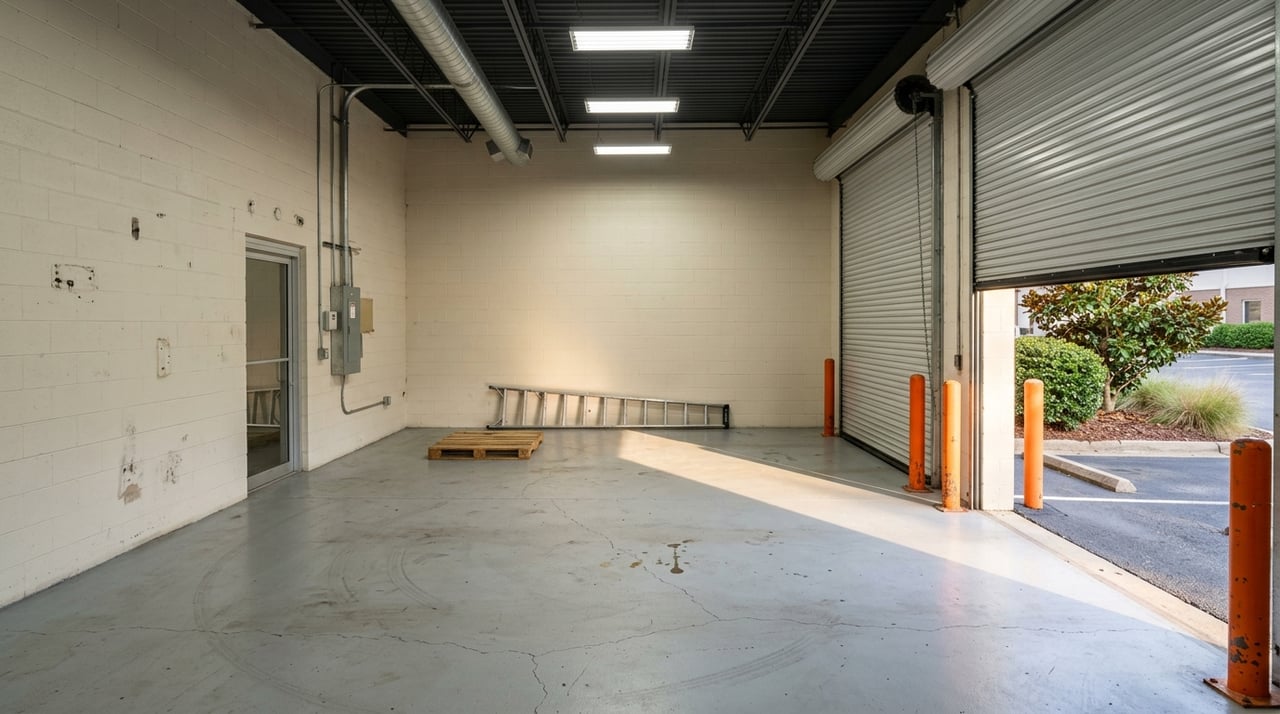
That kind of park-style environment matters if you need room for trucks, better circulation, or a more industrial layout than a street-front corridor usually provides. A current 120,000-square-foot industrial listing in the park advertises 5 dock doors, 4 drive-in doors, and ceiling heights ranging from 22 to 32 feet, which shows the scale of product available there through TCEDA’s listings page.
Tuscaloosa is not only industrial, though. Current retail listings also show asking rates around $8.88 to $18 per square foot per year on corridors such as University Boulevard and McFarland Boulevard East, according to Tuscaloosa retail listings on Crexi. The city also has infill warehouse and flex options, including a 24,760-square-foot warehouse/flex building on 29th Street listed as leased at $6.22 per square foot and zoned IL, or Light Industrial.
Compare building types, not just city names
One of the biggest mistakes tenants make is comparing Northport and Tuscaloosa as if each city offers one standard product. In reality, the building type usually tells you more than the municipal line.
Here is a simple way to think about it:
| Need | Northport | Tuscaloosa |
|---|---|---|
| Highway visibility | Strong along AL-69 and McFarland | Available, but often more varied by corridor |
| Customer-facing shop or service bay | Often a strong fit | Can work, depending on location |
| Warehouse with docks and truck flow | Some options exist | Generally deeper inventory and stronger fit |
| Industrial park setting | Limited compared with Tuscaloosa | Stronger option, especially near Airport Industrial Park |
| Frequent river crossing | May create route sensitivity | May create route sensitivity |
If you are opening a showroom, service center, or customer-driven operation, visibility and access points may matter most. If you are moving pallets, scheduling freight, or managing fleet activity, dock configuration, yard layout, and interstate connectivity should carry more weight.
Rent signals tell part of the story
Asking rents are useful, but they are only one part of the occupancy picture. They also vary by product type, building condition, lease structure, and location within each market.
Based on the current sample in the research, Northport retail asks appear around $14 to $20 per square foot per year, while a larger Northport warehouse/distribution building at 3160 McFarland Boulevard is marketed at $4.75 per square foot per year NNN and includes 6 dock-high doors, 1 drive-in bay, and 20-foot ceilings, according to Northport listings on Crexi.
In Tuscaloosa, the visible retail sample ranges from about $8.88 to $18 per square foot per year, while warehouse and flex examples in the research range from $6.22 per square foot to $7.50 per square foot per year and $9 per square foot per year, based on Tuscaloosa listing samples.
The takeaway is simple: do not assume one side of the river is always cheaper. The more important question is whether you are comparing similar products with similar functionality.
Taxes can affect the long-term decision
If you are considering an owner-occupied purchase or a longer-term occupancy strategy inside city limits, property taxes deserve a closer look. They may not show up the same way as asking rent, but they can still influence your total cost.
According to TCEDA’s tax and incentives information, Northport city property tax is 38.5 mills, while Tuscaloosa city property tax is 51.5 mills. The Tuscaloosa County rate is 27.0 mills.
That difference may matter more for some users than others, especially if the building is larger, owner-occupied, or improvement-heavy. When you are comparing two properties that both work operationally, tax structure can become an important tie-breaker.
Best fit by business type
If you want the quickest read on the market, start here.
Choose Northport if you need visibility
Northport is often the better fit if your business depends on customer recognition, corridor traffic, and a straightforward retail or service setup. This can apply to:
- Small shops
- Service businesses
- Customer-facing service bays
- Retail storefronts
- Small office or medical-style users seeking major-road exposure
The trade-off is that you may need to be more thoughtful about congestion, turning movements, and access management along the busiest corridors.
Choose Tuscaloosa if you need industrial function
Tuscaloosa is usually the stronger choice if your operation needs a warehouse, flex, or light industrial setting with better truck handling and a more industrial street pattern. This can apply to:
- Distribution users
- Trades with storage and fleet needs
- Light industrial businesses
- Flex users needing loading plus office area
- Operators that benefit from proximity to I-20/I-59 or rail access
The main advantage is functionality. You are more likely to find park-style industrial options and building specs that support loading, storage, and movement.
Be cautious if you cross the river daily
If your employees, vendors, or customers move back and forth across the river several times a day, route reliability should sit near the top of your checklist. Corridor work in Northport and the planned bridge replacement on the Tuscaloosa side mean commute and delivery patterns can influence the user experience in a very real way.
How to make the right call
A good site decision usually starts with your operating priorities, not with the city name. Before you tour space, get clear on what matters most.
Ask yourself:
- Do customers need to see you easily from a major road?
- Will trucks, trailers, or delivery vans use the site daily?
- How often will your team cross the river?
- Do you need dock doors, drive-in access, or higher clear heights?
- Is your budget driven more by rent, taxes, or total occupancy cost?
- Are you comparing retail-style space to industrial-style space by mistake?
When you answer those questions first, the Northport versus Tuscaloosa choice gets much easier. The best space is the one that supports how you actually work, not just the one with the most familiar address.
If you are weighing options on both sides of the river, working with a team that understands leasing, space functionality, and what improvements may be needed can save you time. Richard Henry helps businesses sort through practical space decisions in the Tuscaloosa area, from visibility and access to warehouse fit and next-step planning. Find your space.
FAQs
Is Northport or Tuscaloosa better for a small customer-facing shop?
- Northport is often the better fit if your business depends on highway visibility and customer traffic, especially along AL-69 or McFarland Boulevard.
Is Tuscaloosa better for a warehouse or industrial building?
- Tuscaloosa usually offers a stronger industrial environment, with deeper warehouse and flex options, truck-oriented access, and industrial park inventory such as Airport Industrial Park.
How important is river traffic when choosing space in Northport or Tuscaloosa?
- It can be very important if your business crosses the river often, because corridor congestion and the planned Woolsey Finnell Bridge replacement may affect travel reliability and timing.
Are asking rents lower in Northport or Tuscaloosa commercial space?
- Neither market is automatically lower across the board. Current visible asking rents vary by building type, with retail and warehouse products showing different ranges on each side of the river.
Do property taxes differ between Northport and Tuscaloosa commercial locations?
- Yes. TCEDA reports Northport city property tax at 38.5 mills and Tuscaloosa city property tax at 51.5 mills, with the county rate at 27.0 mills.
What should matter most when choosing between Northport and Tuscaloosa for commercial space?
- Your decision should be based on how your business operates, especially visibility needs, truck access, building specs, and how often your team or deliveries need to cross the river.