Summary
The decision to buy or lease commercial space depends on your business strategy—not just real estate preferences.
-
Buy if your space needs are stable, long-term, and operationally critical
-
Lease if you need flexibility, want to preserve cash, or expect growth or change
-
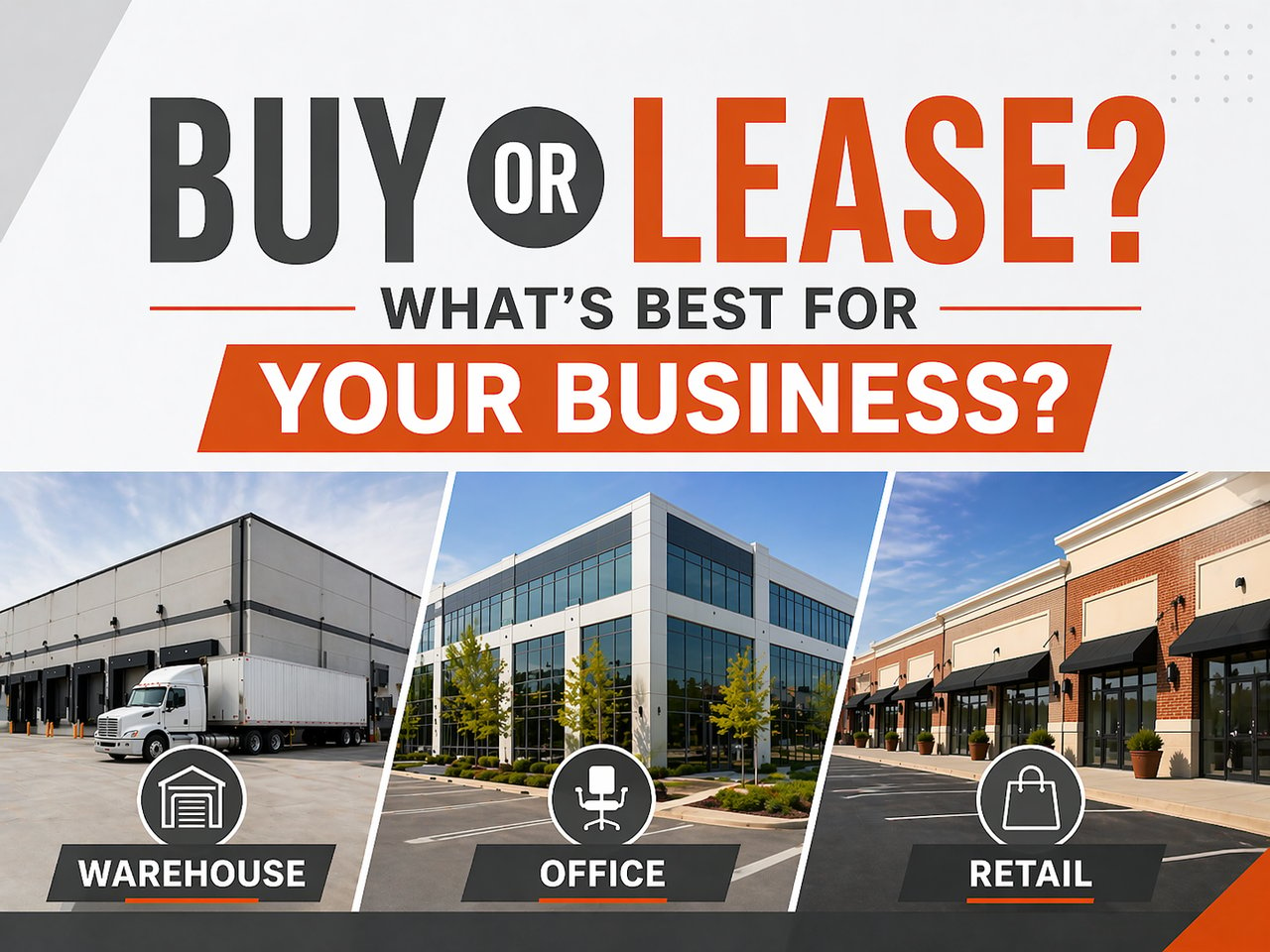
Warehouse often leans toward buying
-
Office often leans toward leasing
-
Retail usually favors leasing due to location importance
The right choice depends on cash flow, growth plans, and how certain you are about your future space needs.
Why This Decision Matters More Than You Think
Choosing whether to buy or lease commercial space isn’t just a real estate decision—it’s a business strategy decision.
-
Buying means allocating capital into real estate and building equity
-
Leasing means preserving cash and maintaining flexibility
Neither option is inherently better. The right choice comes down to your cash flow, growth trajectory, and how your lease is structured—especially when comparing different lease types like triple net vs full-service.
Should You Buy or Lease Warehouse Space?
When Buying Makes Sense
Warehouse space is often the strongest case for ownership—especially when operations are stable.
If your business depends on:
-
Dock access
-
Clear height
-
Truck circulation
-
Outdoor storage
-
Specific layout requirements
…the building becomes part of your operation.
Example Scenario
A distribution company needing ~15,000 SF with consistent operations and predictable staffing is often a strong buying candidate.
Why buying works here:
-
Avoid rent increases and renewal risk
-
Control over improvements
-
Stability for operations
When Leasing Is Smarter
Leasing is better if:
-
You’re growing quickly
-
Your space needs may change
-
You’re unsure of long-term size requirements
Example:
An e-commerce company needing 8,000 SF today but potentially 20,000 SF in two years should likely lease first.
If you're evaluating warehouse options, understanding how long it typically takes to secure and move into space can also impact whether buying or leasing makes more sense.
Should You Buy or Lease Office Space?
Why Office Often Favors Leasing
Office space is less about operations and more about:
-
Employee experience
-
Layout flexibility
-
Location preferences
-
Brand perception
These factors tend to change over time.
Example Scenario
A professional services firm with 10–15 employees may:
-
Want private offices today
-
Shift to open space later
-
Relocate based on hiring or client access
Leasing allows that flexibility.
When Buying Office Space Makes Sense
Buying can work well if:
-
Headcount is stable
-
Long-term location is clear
-
You need control over branding, layout, or parking
Common examples:
-
Medical practices
-
Law firms
-
Established local businesses
Financing options like SBA loans can also make ownership more accessible.
Should You Buy or Lease Retail Space?
Why Retail Typically Favors Leasing
Retail decisions are driven by one thing above all else:
Location.
Key factors include:
-
Visibility
-
Traffic patterns
-
Access and parking
-
Nearby tenants
-
Customer demographics
Leasing gives you access to the best possible location without tying up capital.
Example Scenario
A boutique, restaurant, or fitness concept benefits more from:
-
Being in the right trade area
-
Investing in marketing, staff, and buildout
…than from owning the building.
When Buying Retail Makes Sense
Buying can work if:
-
The business is highly established
-
The location is proven and strategic
-
Long-term fit is certain
But here’s the reality:
Owning the wrong retail property is worse than leasing the right one.
A Simple Framework: Buy vs Lease
You Should Lean Toward Buying If:
-
Your space needs are stable
-
You plan to stay long term
-
The property strongly supports operations
-
You can invest capital without hurting the business
You Should Lean Toward Leasing If:
-
Your footprint may change
-
You want to preserve cash
-
You need flexibility
-
You’re still testing location, size, or concept
The Biggest Mistake Business Owners Make
Most business owners don’t get this wrong because of bad math—they get it wrong because of mindset.
-
Buying can feel like a milestone
-
Leasing can feel like the easier option
But neither is the right reason.
The real question is:
What supports your business best over the next 5–10 years?
That’s the decision framework that actually works.
Final Thoughts
There is no universal answer to whether you should buy or lease commercial space.
-
Warehouse, office, and retail all have different drivers
-
Your business stage matters more than the property type
-
Flexibility and control both have value—it just depends when you need each
If you’re evaluating options in Alabama or trying to think through your next move, getting clarity early can save you a lot of time and money down the road.
FAQ
Is it better to buy or lease commercial property?
It depends on your business. Buying offers stability and equity, while leasing provides flexibility and preserves cash.
Why do warehouse users often buy?
Because their operations depend heavily on the building itself, making long-term control more valuable.
Why do retail businesses usually lease?
Because location is critical, and leasing allows access to better trade areas without large capital investment.
How long should you plan to stay if you buy?
Typically 5–10 years or longer to justify the investment and transaction costs.