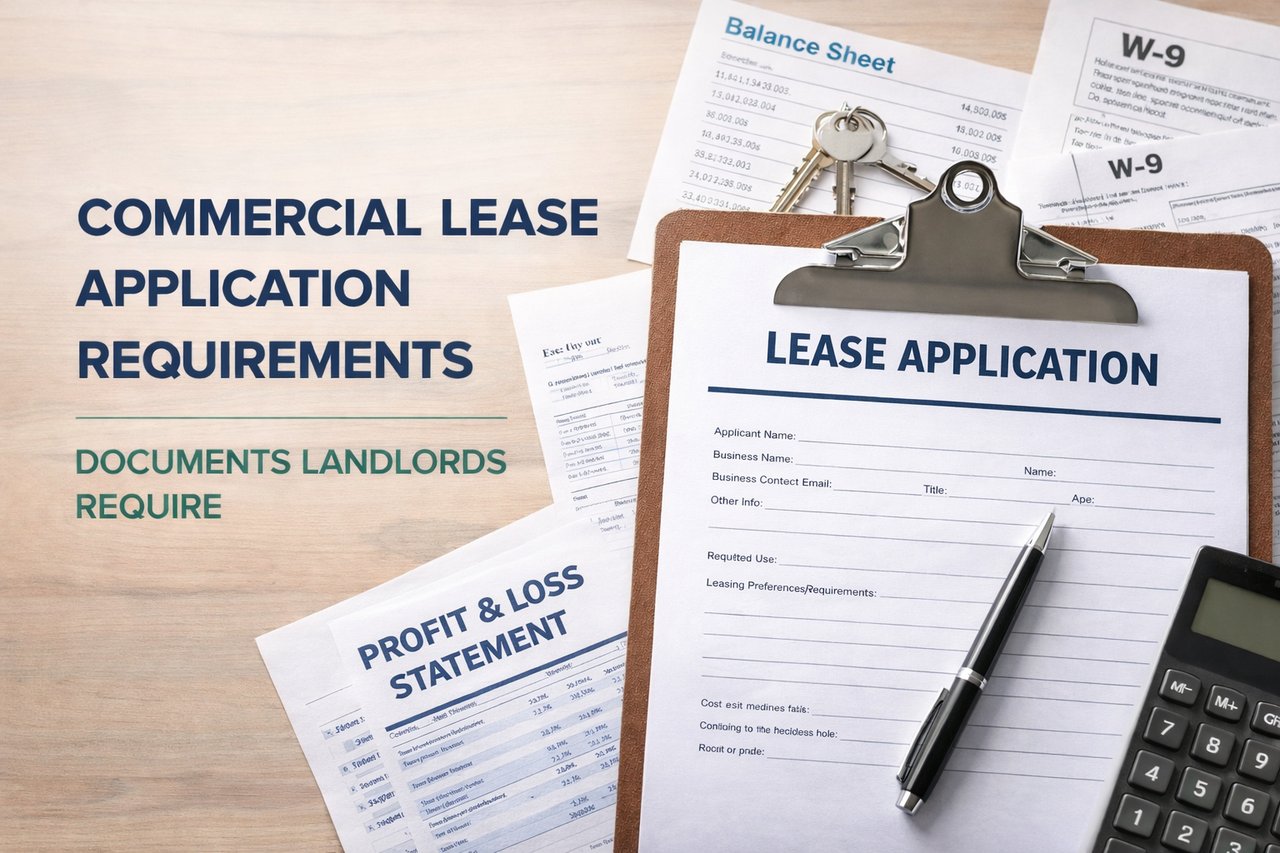
For many business owners, securing commercial space is an exciting milestone. Whether you’re opening your first location, expanding operations, or relocating to a larger facility, leasing commercial real estate represents a major step in the growth of your company.
However, many prospective tenants are surprised when they encounter the commercial lease application process. Unlike residential rentals, commercial landlords require significantly more information before approving a tenant.
A common question we hear from business owners is:
“Why does the landlord need all of this documentation just to review a lease?”
The answer is simple: commercial properties are long-term investments, and landlords must evaluate the stability of the business that will occupy the space. Understanding what landlords review—and preparing the necessary documents in advance—can help businesses move through the leasing process more efficiently.
Why Commercial Landlords Require Detailed Applications
Commercial leases often range from two to five years or longer, depending on the property type and tenant. During that time, the landlord relies on the tenant’s ability to operate a successful business and meet the financial obligations of the lease.
Because of this, landlords typically evaluate several factors before approving a tenant, including:
- The financial stability of the business
- Whether the proposed use complies with zoning regulations
- How the business fits within the property’s tenant mix
- Whether tenant improvements or renovations will be required
- The long-term viability of the business model
Providing this information allows landlords to determine whether the opportunity is a strong fit for the property and helps prevent potential issues later in the lease term.
Typical Documents Required for a Commercial Lease Application
While requirements can vary slightly depending on the landlord and property type, most commercial lease applications include the following documentation.
Financial Statements or Balance Sheets
Landlords want to understand the financial health of the business applying for space. Financial statements help demonstrate that the company has the ability to operate successfully and meet lease obligations.
Business Model or Business Plan
A business overview helps the landlord understand how the space will be used. This may include:
- services offered
- hours of operation
- expected customer traffic
- number of employees onsite
This information is especially important for retail or customer-facing businesses.
Business Tax Returns
Most landlords request the last two years of business tax returns, and in some cases personal returns as well. These documents help verify revenue and financial stability.
Credit Authorization
Commercial landlords typically run a credit check during the application process. A signed authorization form allows the landlord to review the applicant’s credit history.
Requested Tenant Improvements
If your business requires modifications to the space—such as additional offices, specialized equipment, or plumbing upgrades—those requests should be outlined early in the process. Tenant improvements can significantly impact lease negotiations, construction timelines, and occupancy dates.
Articles of Organization or Incorporation
These documents confirm the legal structure of the business entity applying for the lease.
W-9 Form
The W-9 confirms the tax identification information for the business.
Business References
Some landlords request references from lenders, vendors, or previous landlords to better understand the company’s operating history.
Commercial Lease Application Guide
To make the process easier, we’ve put together a simple checklist of what most landlords require during a commercial lease application. Reviewing this ahead of time can help you avoid delays and submit a stronger application.
When a Personal Guarantor May Be Required
For newer businesses or startups, landlords often require a personal guarantor.
A guarantor agrees to stand behind the financial obligations of the lease if the business entity cannot meet them. This reduces the landlord’s risk while still allowing emerging businesses to secure space.
When a guarantor is involved, landlords typically request:
- a copy of a driver’s license
- personal tax returns from the past two years
- credit authorization
While this may seem extensive, it is a common practice in commercial leasing and helps protect both parties entering into a long-term agreement.
Helpful Tools to Prepare Your Business Documentation
If you are preparing to lease commercial space but do not yet have all of your financial documentation organized, there are several free resources that can help you quickly assemble the materials most landlords require.
Preparing these items in advance can significantly improve the efficiency of the application process.
Tools to Create a Profit & Loss Statement
A Profit & Loss statement (P&L) summarizes your business income, expenses, and overall profitability. Landlords often review this document to determine whether the business generates sufficient revenue to support the lease.
Two widely used tools include:
- Wave Accounting – A free accounting platform designed for small businesses that allows you to generate financial reports including profit and loss statements and expense summaries.
-
Microsoft Excel – Excel offers numerous built-in templates for creating simple profit and loss statements. Many businesses already track their income and expenses in spreadsheets, making it easy to generate a P&L quickly.
Balance Sheet Templates
A balance sheet provides a snapshot of a company’s financial position, including assets, liabilities, and owner equity.
Business owners can build a balance sheet using:
-
Microsoft Excel templates available through Microsoft’s template library. These templates automatically calculate totals once you input assets and liabilities.
-
Templates and financial statement examples provided by SCORE, a national organization that supports entrepreneurs through mentoring and business resources.
Business Plan Development Tools
Landlords often request a business plan or business overview to better understand the proposed use of the space.
Several free resources can help entrepreneurs prepare this document.
The U.S. Small Business Administration offers a comprehensive business plan guide along with downloadable templates covering:
-
executive summaries
-
market analysis
-
operational planning
-
financial projections
Another helpful platform is LivePlan, which guides users step-by-step through the process of creating a professional business plan.
Reviewing Your Credit in Advance
Since most commercial landlords evaluate credit during the tenant approval process, reviewing your credit profile beforehand can be helpful.
Business owners can obtain a free annual credit report through AnnualCreditReport.com, which provides reports from the three major credit bureaus.
Reviewing your credit early allows you to identify and address potential issues before submitting your application.
Preparing Early Makes the Leasing Process Much Easier
One of the most common reasons commercial leasing transactions are delayed is incomplete application documentation.
When tenants submit financial statements, business plans, and supporting materials upfront, landlords can evaluate the opportunity much faster. This preparation demonstrates professionalism and stability—two characteristics property owners look for when selecting long-term tenants.
Working With the Right Commercial Real Estate Advisor
Leasing commercial space involves much more than simply finding an available property. Factors such as zoning compliance, tenant improvements, lease structures, and landlord approval requirements all influence whether a location will truly work for a business.
At Right Space Commercial, our team works with entrepreneurs, growing companies, and investors to identify properties that align with both operational needs and long-term business goals. We guide clients through each step of the process—from evaluating available spaces to navigating landlord approvals and negotiating lease terms.
If you are exploring commercial space or preparing to expand your business, our team would be happy to help you evaluate your options and determine the best strategy moving forward.