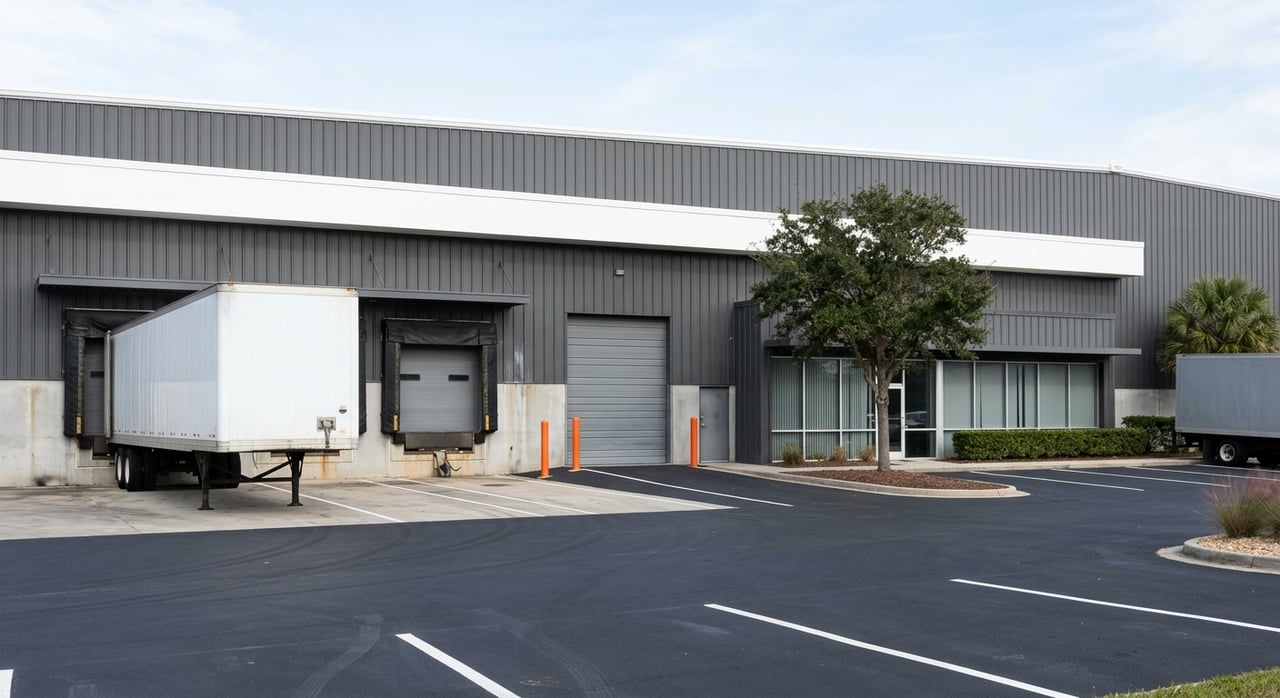
If you are watching industrial real estate in Mobile, one question matters more than most: what happens on the waterfront, and how does that ripple into the warehouse market? That is especially important if you are a business owner looking for space, an investor weighing industrial assets, or a property owner trying to understand where demand may come from next. The short answer is that port activity has a real effect on warehouse demand in Mobile, but it does not show up in a straight line or on a perfect timeline. Let’s dive in.
Port capacity drives the conversation
The Port of Mobile plays an outsized role in how the local warehouse market works. According to the Alabama Port Authority, it is Alabama’s only seaport, and the Mobile Ship Channel reached 50 feet in October 2025, making it the deepest container port in the Gulf.
That matters because deeper water can handle larger vessels, and larger vessels usually mean more cargo moving through the market. The Port’s FY 2024 annual report said container volumes reached 574,415 TEUs, up 1.9% year over year, while Phase IV expansion is pushing capacity from 650,000 TEUs toward more than 1 million TEUs. A later berth project is also expected to raise annual berth capacity to 1.4 million TEU.
For warehouse users, that growth matters beyond the terminal itself. More container and cargo capacity can create more need for nearby storage, staging, transload activity, and value-added logistics space. In simple terms, when the port can move more freight, more industrial space often becomes useful around it.
Cargo mix shapes space needs
Not all port-driven warehouse demand looks the same. The Port of Mobile handles a broad range of cargo, including steel, forest products, finished vehicles, project cargo, grain, and general cargo.
That cargo variety affects what users need from a building. Some groups need dock-high space and quick truck turns, while others may care more about yard storage, rail access, or specialized handling. The Port also reports 2.4 million square feet of covered warehouse space, 2.4 million square feet of open storage, and on-dock refrigerated storage, which shows just how varied cargo handling can be in Mobile.
This is one reason warehouse demand in Mobile is not just about square footage. It is also about fit. A building that works well for a distributor may not work for a steel user, a project cargo operator, or a tenant that needs room for trailers and outdoor storage.
Transportation links expand the demand zone
Port activity creates the starting point, but transportation links determine how far that demand can spread. The Alabama Port Authority says Mobile has direct access to I-10 and I-65, five Class I railroads, four short-line railroads, and nearly 15,000 miles of inland waterways.
That network helps turn Mobile from a port city into a broader distribution hub. The existing Mobile ICTF can move containers to Chicago in three days, and the Port says drivers typically complete dual transactions in 45 minutes or less. Those details matter because speed and connectivity can support warehouse demand well beyond the docks.
In February 2025, the Alabama Port Authority and CSX also broke ground on the Montgomery ICTF on a 272-acre site with direct access to I-85 and Highway 31. By January 2026, the Port said the project was progressing toward 2027 operations with an estimated 60,000-lift annual capacity.
The practical takeaway is simple: a warehouse does not have to sit directly on the water to benefit from port activity. If a site connects efficiently to truck routes, rail, and inland intermodal assets, it can still compete for port-linked users.
Why Mobile functions as a regional logistics hub
This is where Mobile stands apart from a smaller, purely local industrial market. Because of the port, interstate access, rail network, and inland container connections, Mobile serves more than just local businesses.
That broader reach tends to attract importers, exporters, third-party logistics providers, automotive suppliers, manufacturers, and cargo handlers tied to bulk, breakbulk, forest products, steel, and finished vehicles. In other words, Mobile warehouse demand is shaped by regional and supply chain decisions, not just neighborhood-level business growth.
For tenants, that means building selection should start with operations, not just rent. You want to know how freight moves in and out, how quickly trucks can reach major corridors, and whether the building supports the way your cargo is actually handled.
The 2025 market shows a short-term pause
It would be easy to assume that more port investment should always mean lower vacancy and stronger leasing right away. That is not what the latest market data show.
Colliers’ Q4 2025 Mobile industrial report describes the market as port-driven and important to automotive and manufacturing users, but it also shows some near-term softening. Over the prior year, absorption was negative 644,000 square feet, vacancy rose from 4.1% to 6.1%, 250,000 square feet delivered, and 515,000 square feet was underway. Annual rent growth was still 3.0%, and industrial sales totaled $139 million over the prior year.
That mix of numbers tells a more realistic story. Port upgrades can strengthen the long-term case for Mobile, while the lease market may still be working through move-outs, speculative deliveries, and delayed tenant decisions in the short run.
Port growth and warehouse leasing do not move together
This timing issue is one of the most important things to understand. Infrastructure investment and occupancy trends rarely move in lockstep.
A deeper channel, larger berth capacity, and better intermodal links can improve Mobile’s long-run competitive position. At the same time, vacancy can still rise if new space delivers before demand catches up, or if existing users consolidate, relocate, or delay expansion.
If you are evaluating the market today, that means you should avoid oversimplified conclusions. Strong port fundamentals can support future warehouse demand without guaranteeing immediate tightening across every building and submarket.
What tenants should look for in Mobile warehouses
If your business depends on freight movement, some building features matter more in Mobile than in a market with less port exposure. The most competitive properties are often the ones that reduce drayage time and support the way cargo actually moves.
Here are the features worth prioritizing:
- Dock-high or cross-dock layouts for faster loading and unloading
- Sufficient trailer parking and yard depth
- Rail access or rail adjacency where cargo type supports it
- Fast access to I-10 and I-65
- Layouts that fit storage, staging, or value-added logistics needs
These factors can influence labor efficiency, truck circulation, and total transportation cost. For many users, that operational fit matters just as much as the asking rate.
Port-adjacent versus inland sites
Not every warehouse in Mobile competes on the same basis. Some buildings win on speed to the port and direct cargo compatibility, while others win on truck access, land availability, and lower occupancy cost.
Port-adjacent space often appeals to users who need fast turns, stronger rail positioning, or close proximity to marine cargo flows. Inland sites can be a better fit when you need larger parcels, easier regional truck routing, or a different cost structure while still staying connected to the same transportation network.
That means the “best” site depends on your operation. The right question is not whether a building is closest to the port. The right question is whether it helps your business move freight efficiently from the port to its next destination.
What this means for owners and investors
If you own industrial property in Mobile, port activity should be part of how you think about leasing strategy and capital planning. Buildings that support truck flow, yard use, loading efficiency, and cargo handling tend to be better positioned for port-linked demand.
That does not mean every asset needs the same upgrade plan. In some cases, clearer circulation, maintenance improvements, or targeted tenant-ready work may matter more than a major redevelopment. The key is aligning the property with the users most likely to benefit from Mobile’s logistics network.
For investors, the current market also calls for patience and discipline. Long-term infrastructure improvements support the market story, but near-term performance still depends on tenant demand, delivered supply, and how functional each specific property is.
A practical way to read the Mobile market
The Mobile warehouse market is best understood as a logistics ecosystem, not just a set of vacancy numbers. The port creates volume and cargo diversity. Highways, rail, and inland terminals extend that influence across the region. Individual buildings then compete based on how well they match real operating needs.
That is why broad headlines rarely tell the full story. More port capacity can increase the long-term opportunity set, but the winners are usually the sites and buildings that help users move faster, handle cargo more efficiently, and control total occupancy costs.
If you are searching for industrial space or evaluating warehouse property in Mobile, it helps to look past the headline metrics and focus on function. And if you want direct, practical guidance on warehouse leasing, acquisitions, or property strategy in Alabama, talk with Richard Henry.
FAQs
How does Port of Mobile activity affect warehouse demand in Mobile?
- Port activity can increase demand for storage, staging, transload, and logistics space because more cargo volume and larger terminal capacity often create more need for nearby industrial buildings.
Does more port capacity mean lower warehouse vacancy in Mobile right away?
- No. Colliers reported that Mobile’s industrial market had negative absorption and higher vacancy in 2025, which shows that port growth and warehouse occupancy do not always move on the same timeline.
Are port-adjacent warehouses always the best option in Mobile?
- No. Port-adjacent space can offer speed and cargo advantages, but inland sites may be a better fit if they provide stronger truck access, larger land parcels, or lower occupancy cost.
What warehouse features matter most for port-linked users in Mobile?
- Dock-high or cross-dock loading, trailer parking, yard depth, rail access or adjacency, and quick access to I-10 and I-65 are often key decision factors.
Which businesses benefit most from Mobile’s port-driven warehouse market?
- Importers, exporters, 3PLs, automotive suppliers, manufacturers, and cargo handlers tied to steel, forest products, finished vehicles, bulk, breakbulk, and general cargo are among the most likely to benefit.
Why is Mobile considered more than a local warehouse market?
- Mobile connects port operations with interstate access, multiple rail options, inland waterways, and intermodal container facilities, which helps it function as a regional distribution hub rather than only a local industrial market.