A small shopping center usually does not become unstable overnight. It slips there through a few vacancies, deferred maintenance, weak lease structure, and too many day-to-day tasks handled without a system. If you own a center in Tuscaloosa, you are not just trying to fill empty space. You are trying to protect income, compete with newer projects, and make the property easier to operate. This guide walks you through the practical steps that matter most. Let’s dive in.
Start With The Income Problem
If your center feels unstable, start with the numbers before you start with paint colors. Stabilization is first an NOI problem, meaning a net operating income problem, and then a property appearance problem.
That matters because a full-looking center can still underperform if rents are weak, collections are inconsistent, or expenses are not controlled. Industry guidance on commercial management and leasing points back to the same basics: rent level, lease structure, tenant improvement costs, occupancy cost, and day-to-day operations all affect value.
Review Your Rent Roll Closely
Your rent roll should tell you more than who occupies each suite. It should show whether tenants are current, whether rents make sense, when leases expire, and where you may face renewal risk.
Look for a few common problems:
- Past-due balances that have become routine
- Lease expirations clustered too closely together
- Below-market rent that does not support the property
- Missing or unclear expense recovery terms
- Tenants whose total occupancy cost may be too high for their business
If you do not address those issues, cosmetic work alone will not stabilize the center. You may improve appearance while the income side continues to leak.
Check Total Occupancy Cost
Many owners focus only on base rent. In practice, your tenants are making decisions based on total occupancy cost, which can include common area expenses and other charges tied to the lease structure.
If that total cost is too high for the type of business in the space, turnover risk rises. A more durable center usually has tenants whose rent burden fits their business model and sales reality.
Fit Your Plan To Tuscaloosa
Tuscaloosa is not standing still. The city population estimate reached 114,316 in 2025, and Tuscaloosa County reached 241,368. The University of Alabama reported 42,360 students in fall 2025, and visitor spending in Tuscaloosa exceeded $1 billion in 2025, with retail accounting for 16% of that spending.
That mix matters because it points toward everyday-use retail that can serve residents, students, workers, and visitors. In a market with multiple demand layers, small centers often stabilize best when they serve regular needs instead of relying on occasional destination traffic.
Compete On Convenience And Condition
Tuscaloosa also has active retail reinvestment on major corridors. CBRE reported OmniMarket, a 104,979-square-foot redevelopment at McFarland Boulevard East and Skyland Boulevard, was scheduled for delivery in Q3 2026.
For older small centers, that means you cannot compete by vacancy alone. You need a center that is easier to access, easier to park, cleaner to shop, and simpler for tenants to operate from day to day.
Fix The Visible Problems First
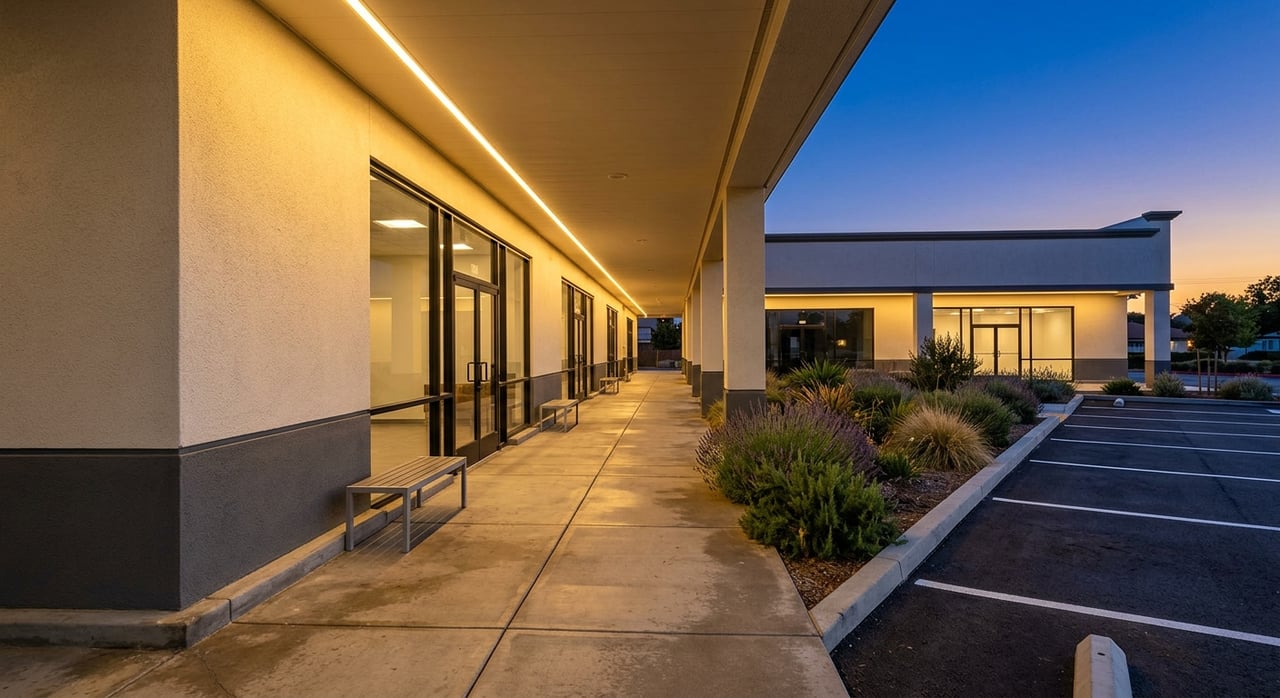
The best physical improvements are often the least glamorous. In many small centers, the highest-value work is the work people notice every single visit.
Focus first on repeatable, visible items such as:
- Parking lot striping
- Pothole repair
- Exterior lighting
- Landscaping cleanup
- Storefront paint or fascia repair
- Trash enclosure cleanup
- Clear pedestrian walkways
These upgrades improve first impressions for both customers and prospects. They also signal that ownership is paying attention, which helps with leasing conversations and tenant confidence.
Do Not Overlook Accessibility
Parking and walkability are part of stabilization. Businesses that provide parking must provide accessible parking spaces, and accessible routes need to stay compliant and unobstructed.
That means accessibility is not a side issue to deal with later. If your parking layout, walkway access, or entrances create friction, you are affecting both customer use and leasing readiness.
Explore Local Improvement Momentum
Tuscaloosa launched its Facelift storefront improvement program in November 2024 to support storefront upgrades on eligible commercial buildings. The city said the program aims to improve visibility, encourage private investment, and create a more inviting commercial environment, with reimbursement of up to $25,000 and a 20% owner match for eligible projects.
Even if you are not relying on that program, it tells you something useful about the local market. Visible storefront improvements matter in Tuscaloosa, and the city is signaling support for that kind of reinvestment.
Verify Permits, Zoning, And Licensing Early
One of the fastest ways to delay stabilization is to lease space to a tenant before confirming what is allowed and what approvals are required. A deal can look done on paper and still stall if use, permits, or licensing are not lined up.
The City of Tuscaloosa Building and Inspections Division handles plan review, permitting, inspections, and code enforcement for commercial projects. The city also notes that commercial projects valued at $100,000 or more generally require a state general contractor license unless an exception applies.
Confirm Use Before Retenanting
Tuscaloosa’s updated zoning ordinance became effective in January 2025. If you are bringing in a new tenant type, changing layout, expanding a space, or updating signage, confirm current zoning and site requirements before you promise a move-in timeline.
That simple step can save weeks of frustration. It also helps you market space to the right users from the start.
Track Business License Readiness
In Tuscaloosa, businesses operating in the city limits or police jurisdiction must have a business license. The city also states that new businesses must pass code compliance review before a license is issued, and annual renewals are due by February 15.
For you as an owner, this matters because tenant openings can be delayed by paperwork, not just construction. A center stabilizes faster when ownership tracks these practical steps and helps reduce opening friction.
Choose Tenants That Match The Market
Not every tenant improves a shopping center just because they fill a vacancy. Long-term stability usually comes from tenant fit, not occupancy at any cost.
Retail research from JLL shows that shopping centers are commonly anchored by groceries and local services, with demand categories that include service, fitness, personal care, medical, convenience-oriented retail, and quick-service food. In Tuscaloosa, that lines up with local demand drivers tied to residents, students, and visitors.
Favor Durable Everyday Users
The University of Alabama brings a large student population, and visitor spending in Tuscaloosa is significant. Visit-related spending is led by food and beverage, gas and service stations, retail, and accommodations.
That suggests a practical leasing approach for a small center. Users tied to daily needs and mixed daytime traffic are often more stabilizing than narrow concepts that depend on a small customer niche.
Examples of generally durable uses can include:
- Personal care services
- Medical or wellness users
- Fitness concepts
- Convenience retail
- Quick-service food
- Mobile service providers
- Everyday business services
The right answer still depends on your site, parking, visibility, and suite size. The point is to match the center to how people already spend money in Tuscaloosa.
Tighten Operations To Protect NOI
Once the economics are reviewed, the property is cleaned up, and the leasing plan is focused, the long-term fix is management discipline. Without that, a center can slide backward even after a strong leasing run.
Commercial management guidance is clear on this point. The work includes physical operations, financial reporting, tenant relations, market positioning, and community image. Those pieces affect value together, not separately.
Centralize The Recurring Work
A tired owner often loses money through scattered decisions. Rent collection, maintenance calls, vendor scheduling, reporting, renewals, and compliance checks all work better when they are handled through one system.
Your recurring checklist should include:
- Rent roll review
- Lease expiration tracking
- Renewal planning
- Prompt maintenance response
- Vendor coordination
- Business license tracking
- Periodic zoning and permit checks
- Ongoing storefront and site upkeep
This is where many small centers either stabilize or stay stuck. Professionalized operations reduce vacancy friction and make the property easier for tenants to stay in.
Think In A Clear Stabilization Sequence
If you are trying to turn around a small Tuscaloosa shopping center, do not treat every problem like it has equal priority. Sequence matters.
A practical order looks like this:
- Correct income issues and lease problems
- Fix visible property condition items
- Confirm accessibility, permits, zoning, and licensing steps
- Lease to durable users that fit local demand
- Put ongoing management and maintenance on a disciplined schedule
That approach fits the way Tuscaloosa works right now. The market has population growth, major university influence, strong visitor spending, and continued retail reinvestment. To compete, an older center needs clear positioning and consistent execution.
If you want a direct plan for your property, Richard Henry can help you evaluate leasing, operations, and targeted improvements so your center is easier to fill and easier to run.
FAQs
What does it mean to stabilize a small Tuscaloosa shopping center?
- It means improving the center’s income performance, reducing avoidable vacancy, fixing visible property issues, leasing to durable users, and managing operations in a consistent way.
What physical repairs matter most for a small retail center in Tuscaloosa?
- The highest-impact items are usually parking lot striping, pothole repair, lighting, landscaping, storefront paint or fascia repair, trash enclosure cleanup, and clear pedestrian paths.
What tenant types often help stabilize a Tuscaloosa shopping center?
- Service, medical, personal care, fitness, convenience retail, and quick-service food users often fit the local demand profile better than narrow destination-only concepts.
What Tuscaloosa approvals should owners check before leasing space?
- Owners should confirm zoning, use, signage, permit requirements, code compliance items, and whether the tenant is prepared for the city business license process.
Why is shopping center management so important to stabilization?
- Good management supports rent collection, lease tracking, maintenance response, vendor coordination, reporting, and tenant relations, all of which help protect NOI and reduce turnover risk.