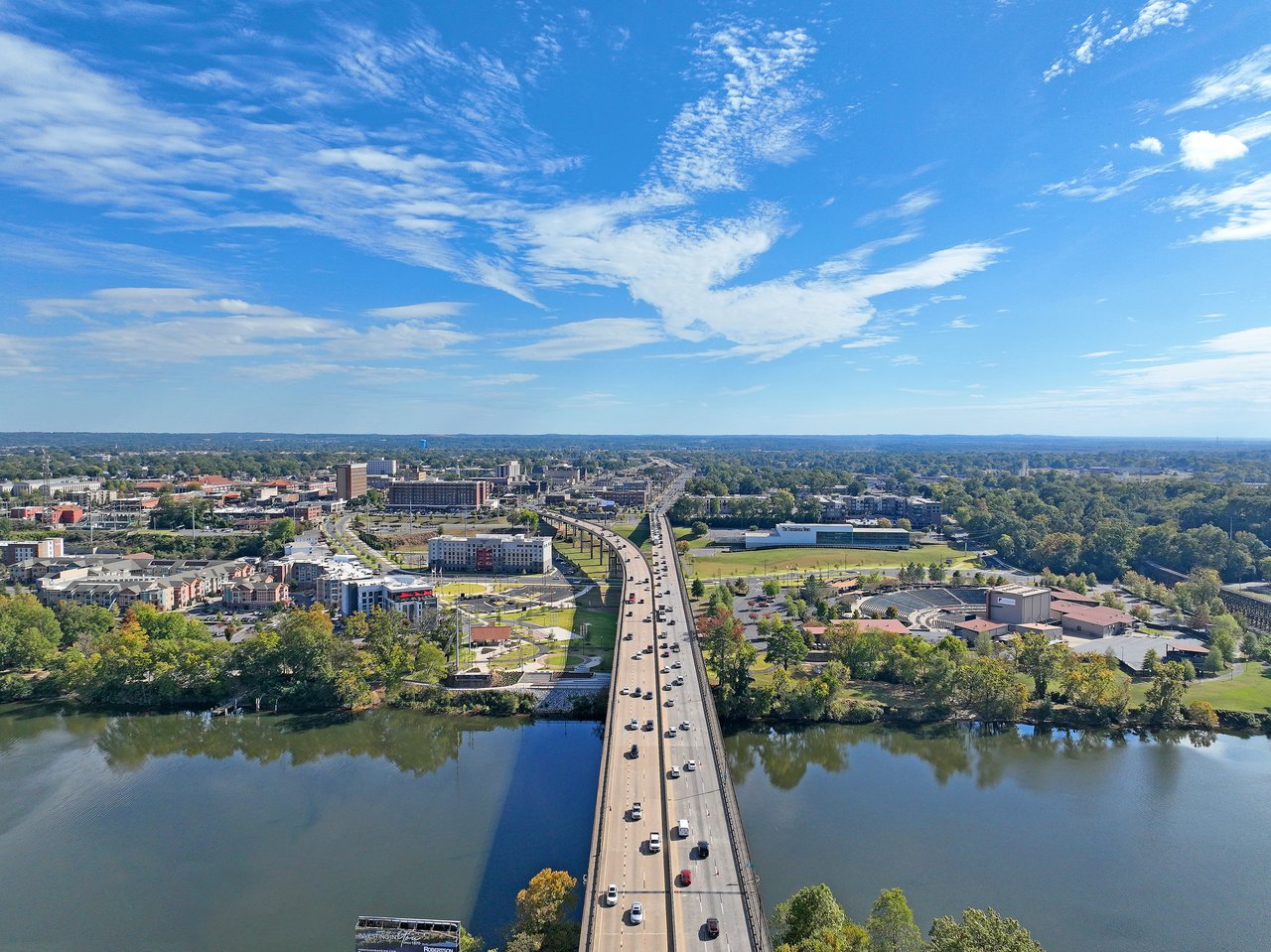
The announced closure of BFGoodrich tire manufacturing operations in Tuscaloosa is major local news. It affects workers, families, suppliers, surrounding businesses, and a piece of the city’s industrial identity that has been part of Tuscaloosa for generations.
This is not the kind of announcement that should be minimized. A plant closure of this size creates real uncertainty, especially for the more than 1,200 employees in Tuscaloosa expected to be impacted as Michelin North America phases down operations through year-end 2028. It also raises important questions about what comes next for one of Tuscaloosa’s most recognizable legacy industrial sites.
From a commercial real estate perspective, the BFGoodrich closure is a serious transition. It does not erase Tuscaloosa’s broader market fundamentals, but it does change the local industrial conversation in a meaningful way.
A long-standing part of Tuscaloosa’s industrial history
The BFGoodrich plant has been tied to Tuscaloosa’s economy for decades. The facility was originally constructed to support the World War II war effort and manufactured its first tire on October 23, 1946.
Over the years, the plant became much more than a manufacturing building. BFGoodrich has previously described the Tuscaloosa site as a 1.6 million-square-foot manufacturing facility that has produced more than 500 million tires. For many people in West Alabama, the plant represents stable employment, skilled labor, manufacturing pride, and a direct connection to the area’s industrial development.
That history matters. When a facility like this winds down, the impact is not limited to a single company or property. It touches a workforce, a supply chain, a tax base, and the way the community thinks about its economic future.
What is happening
Michelin North America announced plans to reorganize U.S. manufacturing operations supporting the BFGoodrich Tires brand. As part of that plan, operations at the Tuscaloosa site are expected to begin winding down in phases and conclude by the end of 2028.
Michelin has said it plans to consolidate nearly all BFGoodrich Tires production at its Fort Wayne, Indiana plant. The company cited structural inefficiencies, underused capacity, and competitive pressure in the recreation and off-road tire market as part of the reasoning behind the decision.
The phased timeline is important. While the closure is expected to impact more than 1,200 employees in Tuscaloosa, no immediate layoffs are expected in late 2026 while transition plans are finalized. Operations are expected to begin gradually winding down in early 2027, with layoffs expected to start during that period. The plant closure is expected to be complete by the end of 2028.
That delayed timeline does not remove the seriousness of the situation, but it does give employees, workforce partners, employers, and community leaders time to prepare before job impacts begin.
A coordinated local response is already beginning
Local workforce and economic development partners are already organizing around the transition. The Chamber of Commerce of West Alabama, West AlabamaWorks, and the Tuscaloosa County Economic Development Authority are coordinating with public officials, education partners, economic development groups, and state agencies to support impacted employees.
That response matters. A closure of this size requires more than a company announcement and a timeline. It requires workforce resources, retraining conversations, employer connections, career support, and planning across the public and private sectors.
For affected employees and their families, the most important issue is what comes next. The phased timeline creates room for that work to begin before layoffs start, which gives the community a better opportunity to connect workers with future employment options and support.
Why this matters locally
A closure involving more than 1,200 employees is a major event for any market. For Tuscaloosa, the impact is especially significant because BFGoodrich has been one of the area’s long-standing industrial employers.
The most immediate concern is the people. Skilled workers, their families, and the households connected to the plant will be affected. That should remain the center of the conversation.
There are also broader business implications. A facility of this size can support vendors, service providers, maintenance contractors, transportation activity, nearby retail, and other businesses that benefit from daily employment and industrial operations. As production winds down, some of that activity may shift, slow, or need to be replaced over time.
For property owners and local businesses, the key point is that major employment transitions can ripple through a market in ways that are not always immediate. Some effects show up quickly. Others take years to become clear.
This does not define the whole Tuscaloosa market
The closure is serious, but it should not be mistaken for a sign that Tuscaloosa’s commercial real estate market is defined by one industrial announcement.
Tuscaloosa still has several durable economic anchors. The University of Alabama remains a major driver of population, employment, construction, services, retail demand, and investor interest. Healthcare continues to support office, service, and employment activity. Automotive and advanced manufacturing remain important parts of the broader regional economy. Logistics access, construction activity, local entrepreneurship, and regional retail demand also continue to shape the market.
Commercial real estate markets are rarely driven by one factor. They are shaped by the mix of employment, infrastructure, population movement, business formation, capital investment, and local decision-making. The BFGoodrich closure changes part of that mix, but it does not erase the rest of it.
For Tuscaloosa, the challenge will be absorbing the loss while staying focused on the assets that continue to make the market viable for businesses, investors, and property owners.
Commercial real estate implications to watch
The most obvious real estate question is what happens to the BFGoodrich site over time. A legacy manufacturing facility of that size is not simple to reposition. Large industrial properties can involve specialized infrastructure, environmental considerations, utility needs, access questions, capital requirements, and a limited pool of potential users.
That means reuse may not be quick or simple. It may require a long-term strategy, public and private coordination, and a clear understanding of what types of users could realistically fit the site.
At the same time, sites of this scale can eventually open the door to new conversations. Depending on future ownership plans, site conditions, infrastructure, and market demand, possibilities could include industrial reuse, partial redevelopment, modernization, logistics-related activity, supplier opportunities, or another form of economic development.
Those are possibilities, not predictions. The important point is that the site will require thoughtful planning. A property of this scale should not be viewed the same way as a typical vacant warehouse or small industrial listing.
There may also be workforce-related implications. Tuscaloosa could eventually see more skilled industrial workers looking for new opportunities in manufacturing, logistics, construction, automotive, healthcare support, maintenance, and technical roles. That could matter to companies evaluating the region, especially if workforce partners are able to connect affected employees with retraining and job placement opportunities.
For nearby properties, the story will likely unfold over time. Businesses and property owners should watch for shifts in traffic patterns, vendor activity, employee spending, industrial demand, and any public announcements about the future of the site.
What businesses and property owners should watch
In the months ahead, local businesses, property owners, and investors should pay attention to several things.
First, watch the timeline. A phased wind-down through 2028 gives the community more time to respond than an immediate closure would, but planning needs to begin early.
Second, watch the workforce response. The Chamber of Commerce of West Alabama, West AlabamaWorks, the Tuscaloosa County Economic Development Authority, public officials, education partners, economic development groups, and state agencies are already part of the broader response. How that coordination unfolds will matter for both workers and employers.
Third, watch future site planning. Any update on the long-term direction of the BFGoodrich property could become a major commercial real estate story. Reuse of a legacy industrial site is a complex process, and the eventual path could influence surrounding property activity.
Fourth, watch nearby business conditions. Plant closures can affect service providers, vendors, retailers, and other businesses that rely on employment concentration and industrial activity. The effects may not be uniform, and they may not all happen at once.
Finally, watch how Tuscaloosa positions itself. Moments like this test a market’s ability to coordinate economic development, workforce support, infrastructure planning, and private investment. The response will matter.
A serious transition that calls for planning
The BFGoodrich closure represents the planned wind-down of a major industrial operation, the loss of long-standing jobs, and the next chapter for a facility that has been part of the community since the 1940s.
At the same time, Tuscaloosa is not a one-company market. The area still has major economic anchors, a regional customer base, institutional stability, skilled workers, logistics advantages, and ongoing commercial activity across office, retail, industrial, land, and service-based sectors.
The right approach is neither panic nor empty optimism. It is planning.
The takeaway: this is a serious transition for Tuscaloosa, its workforce, and the families impacted. At the same time, the phased timeline and coordinated local response create room for thoughtful planning, workforce support, and long-term market strategy as businesses, owners, and investors evaluate what comes next.